Bringing Child Protection Conversations to Broward


Does a child have to hug Grandma just because it’s the holidays? That question got us into a conversation about boundaries, family expectations, and what we’re teaching kids when we ask them to ignore their own discomfort. I sat down with Jessica T. White, a former child protective investigator, mental health counseling graduate, and CEO of the Sexual Exploitation and Abuse Child Protection Agency, or SEACPA. Her organization is headquartered in West Palm Beach, and she’s working to bring more of its prevention education into Broward and Miami.
Jessica shared how more than 21 rejection letters led her to start building training materials at the Delray Beach Library. Now she’s helping families have the conversations many of us would rather put off. We talked about holiday visits, online safety, what makes someone a trusted adult, and why a high five instead of a hug can be about more than manners. What stayed with me was her emphasis on practicing these conversations before a child needs them.
=== Chapters
- 00:09 Welcome and Meet Jessica T. White
- 01:57 What Child Protection Really Means
- 02:56 From Investigations to Abuse Prevention
- 08:09 Building SEACPA at the Delray Beach Library
- 10:48 Holiday Safety and Prevention for Protection
- 14:07 Starting Body Safety Conversations
- 19:13 Trusted Adults and Age-Appropriate Safety Talks
- 21:55 When Relatives Push Back on Boundaries
- 23:24 Talking With Kids About Online Safety
- 25:13 Bringing Prevention Education to Broward
- 26:57 Family Resources and My Body Is My Own
=== Guest: Jessica T. White, Sexual Exploitation and Abuse Child Protection Agency (SEACPA)
- Website: https://mychildprotection.com
- LinkedIn: https://www.linkedin.com/in/jessica-t-white-m-s-16a9a5a2
=== Local Businesses / Organizations / Nonprofits
- Barry University: https://www.barry.edu/en/library
- National Center for Missing & Exploited Children: https://www.missingkids.org/home?lang=en-US
- Walmart: https://www.walmart.com/cp/netflix/6920835
=== Events / Attractions / Venues
- Delray Beach Public Library: https://www.delraylibrary.org/
=== Resources / Books / Podcasts / Apps
- Holiday Child Protection Checklist: https://mychildprotection.com/products/digital-product
- Holiday Child Protection Guide: https://mychildprotection.com/products/seacpa-holiday-child-protection-guide
- Our Family Action Plan: https://mychildprotection.com/products/our-family-action-plan-child-safety-printable
- My Body Is My Own (Jessica T. White’s children’s book featuring Jacob): https://link.amazon/B0etKmOgs
=== MUSIC LICENSE CERTIFICATE
- Title: Happy Epic And Confident Corporate Background Piece To Suit Health Or Dynamic
- Item ID: 195889930
- Publisher: Saowakhon Brown
- Composer: Saowakhon Brown
- License: Individual License, Commercial
- Stock Media provided by TheSaoLady / Pond5
Website: https://www.letstalklauderdale.com/
Let’s Talk Lauderdale is hosted by Marvin Bee & Jen Stewart.
Subscribe for more behind-the-scenes Lauderdale stories and pass this episode along—because every Fort Lauderdale memory deserves an audience.
[0:09] Hello, everyone, and welcome back to Let's Talk Lauderdale.
[0:13] I'm your host, Uncle Marv, and this is where we get to know the people, stories, and ideas making a difference in our South Florida community. And with the holidays coming up, a lot of us are planning family gatherings, visits.
[0:28] Time with the people we love, but there's one conversation that may not make it to the to-do list, how we help our children feel safe, set boundaries, and speak up when something doesn't feel right. My guest today is Jessica T. White. She is a child protection educator, advocate, and CEO of the Sexual Exploitation and Abuse Child Protection Agency. We're going to shorten that to SEACPA, and we'll talk about what brought her into this work, what her prevention for protection initiative means and some practical ways that adults can start these conversations. So let's get into it, folks. Jessica, welcome to the show. Hello, hello. How are you doing today? I am doing fantastic. So this is one of those conversations that people kind of shy away from until something happens, right? Yes, yes, for sure. and obviously we would like to have people think about all of this stuff ahead of time listen we watch tv shows we watch movies um, even the movie taken you know the movie taken everybody talks about oh that wouldn't be me but yet you know you say that but, then again we don't plan well so hopefully you'll help us get past that yes that's what I m here for i want to help you get past it. I did. All right.
[1:57] So I guess when we say child protection, where should that begin in terms of what it looks like for an ordinary family?
[2:06] So when I think child protection, I first always like to use the example of getting in the car and putting your seatbelt on or leaving your house and locking the door. When we think child protection, it's not just a routine that we do of like just getting our kids where they need to go. When we think child protection, we have to think in a 360 way, body, mind, spirit. And this is going to help us understand that our children understand their bodies is their own as well. So when we think protection, a lot of times we put on a helmet when we get on a bicycle, right? Or we put some elbow pads on if we're skating and some knee pads. However, that's protecting the outer parts of your body, yes. But there's other forms of child protection that takes place that will keep kids safe in a more intimate way. Nice, nice.
[2:56] So as I mentioned, the name of the organization, it starts off with sexual exploitation. So what moved you to, I guess, specializing in sexual abuse prevention? So I am a former child protective investigator, and I will say that I also did mental health counseling for children who are in sexual abuse and human traffic. So I had this love for the work of social work, and I always thought that the social workers were just that, social workers. But I did not know there was a differentiation between social workers and child protective investigators. So when I was going to school, I was like, I want to be able to help the population who are most vulnerable. And for me, I seen that that would be sexually abused children who had unencountered sexual abuse. And a lot of times, if you see domestic violence in the home, not all the time, or you see some type of trauma taking adverse childhood experiences taking place inside of a home, nine out of 10, a lot of times you're going to also see some form of sexual abuse. And so I came about this because of my investigative skills. And what ended up happening was when I was in investigations, we had so little training on the sexual abuse cases. And I remember telling my friend like, hey, one day I'm going to come back and train these people. I was just talking. So I thought.
[4:18] And a part of me talking led to, you know, me getting my degree in mental health counseling and learning all the strategies and skills. But then what ended up happening was I came back home, had over 21 rejection letters, and I was like, I need something. I need to be able to help because here in Palm Beach County, we don't have that many sexual abuse education facilities. And so I end up creating this using both of my skills of investigations and mental health counseling to create this organization to have a niche of sexual abuse and exploitation. Right. So let me ask this question. Was part of the reason that there wasn't resources dedicated to it because they kind of put that under the criminal aspect? Because usually people.
[5:04] People don't talk about it until it becomes criminal and you find the, you know, the predators and stuff out there. So we kind of like, oh, shove that off to the side. Is that part of the reason why there weren't resources? I can't really say why. I don't know any specific answer to that question, but I can say sexual sex in itself is just a taboo topic, you know, and then you're talking about a violation, which is sexual abuse or sexual assault. A lot of people shy away from talking about that topic, let alone sex, you know, sexual education. And so I believe it just kind of went hand in hand of like, hey, we're going to hit this on the head. And then now we're going to talk about domestic violence. And you have a whole day and a half about domestic violence versus having that portion on just sexual abuse. Very interesting. So how long were you doing the investigative work before you realized something needed to change.
[6:06] Huh. I think it was in training. It was in training. It was in training. You know, when I got there, they had like a lot of like 80s type of cases, things that happened in the 80s and the 90s. And when I became an investigator was 2015. And so or 2016, I believe it was. And so some of the things they were still very prevalent. Don't get me wrong. But some of them, to me, were just a little outdated to what the world was changing to now, because you begin to see in the news and the media a lot more about trafficking and commercial sexual exploitation of children. And so I feel like it was outdated. So I want to say after the first, what do you call it, segment or module of training, I realized, like, hey, that's it for sexual abuse. We did all of this on substance abuse. We did all of this on domestic violence. But that's it. And another thing that took place was a lot of the colleagues that I work with, my peers, they were becoming triggered because you would go out to a domestic violence case, but then you're interviewing the children and then you later find out there's allegations of sexual abuse. And so that was one of the things I'm like, wait a minute. You went out for a DV case and you did not know when you were coming that you were going to get a whole gamut of stuff and then you would feel ill-prepared for it. So that's when I realized, hey, we got to come back and train.
[7:27] Yes. And I imagine. So let me get let me go back. So I did a little checking. So you attended Berry University, right? Yes, I did. And you got your Master of Science in mental health counseling. Yes. Which, of course, probably nothing about sex in there, was it? Not really. Well, there was a course about, like, sex addiction and things, but nothing specifically tied to sexual abuse. No, nothing, nothing. You know, there was a crisis. It was called crisis intervention. That was the course that we had to take. Gotcha. And so you'll hit here and there, but it wasn't anything prevalent about helping people from, you know, childhood traumas of sexual abuse specifically. Okay.
[8:09] So let's take the overall look now at SEA, CPA. How did that form and what is the core work that it's doing today? OK, so it was formed in the library at Dary Beach.
[8:25] I'm going to get as raw as possible, y'all. Like I said in the beginning of this, I had over 21 rejection letters. I say over 21 because I stopped counting at 21. When I moved back from Miami to Palm Beach County, I'm like, oh, my gosh, I'm going to come save the babies. This is going to be great. But I realized here in Palm Beach County, we have a lot of substance abuse type of organizations or a lot of adoption organizations. But there was nothing specifically tied to sexual crimes against children. Of course, we have like a victim advocacy center. I won't take away from that. But I'm saying specifically towards sexual abuse against children and training people and parents on how to even respond. So I began to go to the Delray Beach Library and I began to start writing curriculum. I took everything that I knew. I took everything that I studied, all the certifications that I had in childhood trauma and sexual abuse and adverse childhood experiences. And I began to work diligently for about a year, creating trainings and courses.
[9:25] Meeting with law enforcement, meeting with firefighters, because our initial, mission was to equip professionals to combat sexual crimes against children. Because many of the professionals were going out, but they did not have an empathic response when they were taught the children who were sexual abused or human trafficked. Sometimes they would get treated like they were criminals or like it was their fault. And I understand because, you know, you know, law enforcement, everybody, they have their own merits on how they do things. But I would go out and sometimes with police officers and I'm like, hey, that's not how we should have talked to that kid. You know, they were violated. So we got to be a little bit more softer. So I end up creating empathic response training on how to sit with children and talk to them, how to interview them so that they're not re-victimized or treated like they're a criminal. And I was creating that. In the Delray Beach library, y'all, with no money.
[10:20] And I was just walking by faith. God literally said that the harvest is plentiful and the laborers are few. You're going to be raising up more people in this field to be able to have empathic response. So that's how it started. Okay. So that was a decade ago, a little resources. I imagine now that you've got more. Yes, it started in 2019. 2019, okay. Yes. But still a lot of work left to do.
[10:48] Let's talk about, because the reason we're doing this show is you wanted to talk about, you know, things that we can do before the holidays. Yes. One of those times. I imagine is, I know we see the holiday movies, you know, kids left home alone and we get a lot of these child adoption things on Lifetime and stuff like that. But is the holiday season one of those times where things happen because we're just not paying attention? We're ignoring things because we want the times to be festive. Yes, most certainly. So as time progressed, when I was doing investigative work, I realized that around April, we would begin to get a lot of allegations of sexual crimes against children. And some of those children were sharing that they had been, you know, molested or raped and.
[11:48] The holiday time. And a lot of times this was happening because some people can't take off of work. You know, some people can't take off of work. They pick up extra hours so they can make ends meet for their family so the kids can have what they need. Their sleepover is taking place, you know, or you have a trusted friend that you just truly believe had your child's best interest. And so kids are being left with people and things are taking place. There's child on child sexual abuse and 90% of children who are abused are abused by someone the family knows and trusts. And so a lot of times we were getting those cases and I'm like, okay, we got to get in front of this. And so I always knew I wanted to come up with something specifically geared towards the holiday season because I had never heard it. And so recently we expanded our mission from just professionals, but to professionals, caregivers, and communities so that we can be able to really implement how to keep kids safe during the holiday season through our Prevention for Protection Initiative, which is a direct extension of our mission. And it allows us to create these practical, you know, steps and resources for families. So, yes, a lot of things happen because we get lenient, we get vulnerable. Yeah. So, folks, I'm going to have links in the show notes to some documents I want you to get. But all of this is going to actually come from the main website, mychildprotection.com. So that is a place where you can go and get a lot of the resources.
[13:18] Hear the story of SCA, CPA, and all of that. You actually, is this the first year that you've done the holiday child protection checklist? Yes, yes, it is. So we would go and we would talk to people often about what they need to do. And I seen that there was a need. And so we just launched the Prevention for Protection Initiative in September. And through that initiative, we have the holiday edition, which is allowed us to create the action plan, the checklist and all of the resources that we have. So this is the first year and we're so excited about it. It's been doing pretty well. All right. So I'm going to have a link for that vote specifically that you can go down like six simple steps, nothing really major, nothing little, you know, that'll overwhelm you or anything like that.
[14:07] But let's do this. Let's talk about, you know, what things look like in terms of what should we do like in preparing for the holiday visit? What should adults discuss before? Okay. This is my favorite part because I love this.
[14:26] I always tell families, I say, hey, it's important to talk to your children before you go to go anywhere, the store, wherever. It's important to have the conversation with your child first. So the first step you need to do, there's three major steps. But the first one is talk. Build a rapport with your child. It doesn't matter what age they are. I always say when people say, well, when should I talk to my kid about, you know, body safety? Yesterday. You should have talked to them yesterday. You know, and I say it starts by teaching them the correct terminologies for their body parts. And so, you know, if you have a zero to five year old child, of course, you're going to teach them eyes, ears, nose, mouth. But you also need to teach them the correct words for their private areas. That is so important because a lot of times when we got cases, kids were saying their pocketbook or their pogo stick. They were saying all kind of names. And when they got the allegations, the teacher or they would tell the teacher. Or they would tell the trusted adult, they did not know what the child was talking about.
[15:26] And so it is so important to, even in your teen years, I knew a couple of teenagers that did not know the correct terminology for their private areas because their parent felt like they weren't ready to know that information yet. Of course, you know your child, but that is so important. When we talk protection, that's what we mean. Teach them to correct, educate them. So the first thing I would say is talk to your children. Talk to them about body safety. Let them know to pick who their trusted adult is. And you also begin to put things into practice. So you talk to them first. Begin to have the conversation. That's what the holiday child protection guide is for. If you were to go get that guide, it's going to tell you each month what type of prompts you should talk about with your family. And even if it makes you uncomfortable, you have to understand And your child is uncomfortable if somebody mistreats them or molasses them or touched them in a certain way. So you might as well get uncomfortable and have that conversation. So the first thing I would say is talk to them about body safety and boundaries. Well, I would say a bigger reason to have that talk is if you don't have it with them, somebody else will. And with the way that these kids, they're on the internet early. And the internet, listen, as much as we try to put the guardrails in there, kids can get around the guardrails if you don't specifically go in and put in.
[16:53] Child protections and, you know, which sites to go to, set up child accounts on your streaming apps. That's a big thing that I, you know, parents a lot of times, they'll just leave Netflix wide open and actually, you know, their kids are watching, you know, movies they shouldn't be watching. Right. And not only that, teach them at home because we can do, we can safeguard them at home, but they're going to their cousin's house. They're going to their friend's house. They may not have safety rails. So what do you do if you see something inappropriate on TV? You can call me, you can text me, you could tell me, hey, this was what I was saying or my friend tried to, because remember, they have influences around them. You know, your job is to protect your child and to be able to install things in them. So I want to give you guys an example of something I just recently heard. This is not my story; I just heard it on social media. There was a guy that was in Walmart and he had taken this little girl. And so the dad that was telling this story was saying that the little girl ran up to his daughter.
[17:51] And she looked to be about eight years old, and she whispered something. He thought his daughter knew this little girl. She whispered something in the little girl's ear. This just happened. She whispered something in the little girl's ear, but she whispered, pretend to be my friend. So this man was there saying, hey, come on, uncle was looking for you. And so he was like, oh, thank you, uncle, looking for you. The dad said that. She was like, that's not my uncle. That's not my uncle. So he said another man comes around the corner like, oh my God, and she runs up to him. That was her dad and then the man when they turned he was gone the man because the man that took her she told that this is what the dad that father who had lost his child for that split second said I told my daughter at.
[18:32] Home before we go out if you ever get separated from daddy go to another find another little girl or another little kid and say we can you pretend to be my friend because their parent is going to ask what's going on and she followed her dad's instructions because she put it into practice at home. And then when it actually happened, he didn't anticipate this happening. He didn't anticipate this happening to his child, but she followed those instructions. So if you put it into practice and say, hey, if you see something inappropriate or hear something, somebody's trying to touch you inappropriately, this is what you do. Your child is going to listen to you. That's a very good, very good example. Very good example.
[19:13] So you had mentioned earlier, that before you go, you identify trusted adults. Um, creating a family protection plan. I guess this is what, you know, that example was. Obviously, this is going to look different for every single family. You have to come up with what works for you. You have to come up with conversations that your kids understand and stuff. Uh, how does the conversation change for a preschooler, an elementary age school child, and a teenager. Okay. So when we're talking about, you know, a preschooler, that's when you're giving those basic information, but you're also telling them how.
[19:54] I want to go to the trusted adults. Trusted adults are people that you and your child identify that you actually trust. Yes. However, what separates them from somebody you think you trust and the actual trusted adult is helping your child understand a trusted adult is somebody who respects your boundaries and takes your concerns seriously. And if you tell them something, they will come and tell us. They will not tell you to keep a secret. They will not tell you, let's do something that's not appropriate. A trusted adult will literally be held accountable. That's how you identify that with a kid. Because, I mean, sometimes it's the mom's brother or the dad's friend, you know. So this is how you identify what a trusted adult is. So if you're dealing with a preschooler or you're talking to a preschooler, you identify the basics and let them know like, hey, these are your body parts. Only mommy and daddy is supposed to touch your body parts. Be very basic. When it comes to elementary school, then you evolve a little bit because around about the age of eight years old, you're going to start having a conversation about puberty before it happens. You have to say, hey, this is what's going to happen. Some people, you may be playing on the playground and somebody might ask you, could they see your private area? And you have to say no. And when it comes to a teenager, you begin to talk to them at day level okay because a lot of the teenagers are online you begin to share with them about sexual um.
[21:18] Extortion what people do for money as far as like hey they'll tell you to send pictures and you know not to send any pictures but they'll tell you if you send me this picture and pretend to be somebody they're not they could pretend to be another little girl many children have could die by suicide because they believe they were talking to the opposite sex but it was really a grown person on the other side and when they sent those pictures they said hey if you don't send me X amount of dollars. By this time, I'm going to expose your news to the world. You know, and so you have to have those type of conversations. That's just in a nutshell. Right.
[21:55] Let me do a sidebar question here. I hope it doesn't go too far out. But what if you are a parent, caregiver, and you have a relative that is dismissing, your boundaries as either rude or unnecessary or restrictive? Let the child live. Don't be doing that to them. Stuff like that. I imagine that's got to come up a lot. Good question. You hold your ground. You stand flat-footed, and you continue to move according to how you know you are teaching your family. You have to always tell people consistency is key. And if they're not respecting those boundaries, I will go so far as to say, hey, start dealing with them with a long-handled spoon. Because to me, that's a red flag. Even though they may mean no harm, it is harm, because now what is it teaching the child? Is teaching the child, grandma can't cross this boundary, but such and such can't cross this boundary. No, stay consistent. If you teach your child, if they don't want to be able to be hugged that day, hey, I don't want to be hugged. Let's do a fist pump. Let's do this. And you can teach your child how to do it in a respectable way. And you let your family know, because that has come up. Yes. Because there's some people say, I don't care about none of that. That's my grandbaby. That's that. That's, you know. And it's like, yes, but I'm teaching them because if we're out in public and something happens, they don't need to freeze up like, well, my grandma did this. So, you know, you understand. So you have to be consistent. Gotcha. Gotcha.
[23:24] Let's transition now to online. Our world lives online now. So how do you help parents discuss online experiences with their children without making them? I'm trying to figure out without, you know, threatening the kids that you'll take the devices away. Education is key. I always say to educate them. If you know your child can handle certain things, sit down with them and just be raw. My mother was raw with me. My mother was just cutthroat. She cut to the chase when I was in kindergarten. You hear what I say?
[24:04] So, and I know some people are uncomfortable with that. But I say what you said earlier, they're already seeing things be very get there's what is it called? The missing. I forgot what it's called missing and exploited children agency. They have a lot of online resources for what to say to your child online. They have a lot of like skits online. And I know it may seem kind of corny to your child. But let me tell you something. They might act like they're not listening, but I guarantee you they hear you. They hear you. So I would say start finding resources online that you can actually show real data, especially teenagers. Teenagers, you got to prove stuff to them, you know. And so show real data of something that has taken place and show them all. Get an article. Say, hey, I want to have a conversation with you today. We're going to talk about online safety. This is what happened to this little boy and blah, blah, blah, blah, blah. Give them an example. You have to be practical with kids. Do demonstrations with them so that they have understanding of this is serious.
[25:03] I hope that was helpful. It was. It was. I'm trying to make sure we get everything in. There's a lot. And we could just talk for a long time with this.
[25:13] Let me now get to the area that you represent. I know you said you were in Miami and you went back home to Palm Beach to kind of take care of this. The show is about Fort Lauderdale and greater Fort Lauderdale. Of course, I'm going to talk about anything all over South Florida. Are you doing anything specific to the Broward County area or Miami, or is it just in West Palm? No, we're global. Our reach is global. So I'm glad that you asked that. We're a multifaceted agency. We're headquartered in West Palm Beach, but we get calls from Wisconsin, Wyoming, Hawaii. We have gotten calls everywhere. We're global. It's not just to Florida. It's literally outside of Florida. And if I could be honest, we've gotten more work outside of Florida than we have inside of Florida, because it seems like Florida has so much red tape and we've been trying to cut through that tape for a couple of a couple of years. But we will go where we are sent. We will go where we are called, where there's a need. That's where we go. And we're really trying to get in the Broward community and the back in the Miami community as well with our agency so that they know. The thing about this is I got to talk to someone in Fort Lauderdale and they was just sharing their narrative and what happened to them with their child. And they said, thank you that you have an agency like that. That's not only just a representation of what I look like but also thank you for this because.
[26:37] You know, there's agencies that do the intervention part, but I'm doing the prevention part. And there's a big difference between intervention and prevention. And so, you know, going down to Fort Lauderdale, that's something though, or the Broward area, that's something that we really want to be able to expand upon. But we're not just here in Florida, we're global. Okay.
[26:57] We mentioned the holiday child protection checklist. You mentioned the guide, the holiday a child protection guide that all of that is available on the website. And then also I'm going to have a link to, uh, let's see, it's our family action plan. Yes. Uh, which is a nice little, uh, thing here that you can set up for the child.
[27:22] Um, the boundary phrase, the three trusted adults and, uh, Those are great things. I also want to make sure before we run out of time here, you've got a book that is, is it out or scheduled to be out? Where are we at with that? So it is launching tomorrow. It gets released tomorrow. I'm so excited about it because it's our first child protection book. And it is called My Body Is My Own. This is our little boy, Jacob, here. And we're excited about this book because it's specifically geared towards the holiday season. And another reason why we're excited about this book is because it's for all children, but we dedicated it to every black boy. And we did that because oftentimes you see a lot of kids on books as usually young ladies or they're of Caucasian descent or another race. And I wanted to make representation for our little black boys. That was so important for me because I know so many young men who have been, who have experienced.
[28:21] Some form of sexual abuse or they may have under, undergone sex secondary sexual abuse or trauma where they've witnessed it and they've never been able to tell anybody but for some reason they always come and they say I'm a safe space and they always come and they tell me what happened to them and so I said this there's a need for them to know that their voice matter what happened to them is not their fault and their body matters so we created Jacob because he's you know educating the children on how to keep kids safe. Not only that, how to protect your body. If you don't want to be touched in a certain way, he's literally going through the holiday season saying, if I don't want my cheeks pinched, don't pinch my cheeks. You know, if I don't want a hug, give me a high five. So yes.
[29:07] All right. So we'll hopefully have a link for that as well, where you can go and get the book and enjoy that. I'm just making sure I get the website back in here. My Child protection.com. And I like what you've got in the middle of the page there. Uh, protection is for every child. Yes. Uh, child sex abuse is preventable. And it starts with adults creating safe relationships and environments around children's.
[29:37] All right, Jessica, is there any last thoughts you want to leave our listeners with about how they can use these guides and what they can do to educate themselves more? Yeah, so I want them to know that, you know, I know this is such a taboo topic, but it's something never think that nothing can happen to you that won't happen to you.
[29:58] I think it's important to continue to prepare so that you can prevent just like you're going to get in that car and put your seatbelt on god forbid an accident happens at least you had some type of restraint to hold you back from going through the windshield right it's the same thing with your children do not think for a moment that just because you know you have all the safety guards because there's people that are influencing them around them as well so you have to continue to talk to them. You have to help them understand their trusted adults. And you have to put it into practice. That is so important, putting it into practice. Also, we're going to have, we're launching our network, My Child Protection TV, where you'll be able to log in and see resources like these. But also, we're going to speak to the heart of the professionals and the caregivers because you carry so much. And so we want to be able to encourage you and empower you to be able to speak to your children. Thank you. All right. Well, we will look forward to all of that coming out. Again, I'll have links in the show notes for all that. And Jessica, as these things come out, let us know and we will get them promoted for you. Thank you so much. And thank you for having me on here to have this conversation. Well, thank you for joining me and thank you for helping us to have a conversation.
[31:14] That it can be difficult to start, but obviously worth the time to make time for. Yes, thank you. All right, folks, for everyone listening here, obviously, we're going to have a next step for you. Don't let this be an episode that you hear and then just forget about it. Choose something from today's conversation that you can put into practice. If you've got children, make sure you're talking with them. Discuss those boundaries before the holidays here and find a local organization.
[31:49] And see what they can do to help you with safety. If you don't know, then just head over to Jessica's website. They've got free downloadable resources. And as she said, they're global. So they can help out. And we also consult, I'm sorry. Go ahead. We also consult with families as well, if they have any questions. We are available for that as well. All right. There you go. All right, folks. Everything will be in the show notes. Take a look. Share the episode with another parent, a caregiver, coach, someone who works with children. And if you appreciate getting to know more people and ideas shaping our community, follow Let's Talk Lauderdale wherever you listen. Tell a friend about the show. Thank you very much. I'm Uncle Marv. Thanks for spending part of your day with us. And until next time, keep connecting, keep asking questions, and let's keep talking Lauderdale.
Sexual Exploitation and Abuse Expert
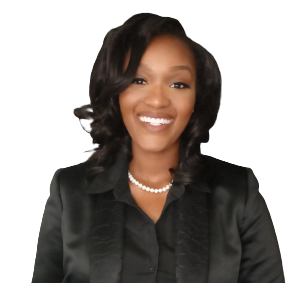
Jessica T. White, M.S., is a sexual exploitation and abuse expert, award-winning philanthropist, author, and TEDx speaker. She holds a master’s degree in Mental Health Counseling and a NOCN-approved Level 7 Post Graduate Certificate in Child Protection, completed through the University of Applied Research & Development in collaboration with the Institute on Violence, Abuse and Trauma.
As CEO of the Sexual Exploitation and Abuse Child Protection Agency, LLC (SEACPA), Jessica educates professionals, caregivers, and communities globally on combating sexual crimes against children. In 2018, she contributed to the development of policies supporting Alliance 8.7 at the United Nations. She has spoken at the Krimes Against Kids Conference, Wisconsin Serving Victims of Crime Conference, and Coalition to End Sexual Exploitation Global Summit, with repeat invitations to the Wyoming Youth Symposium. She is also the founder of the Global Sexual Exploitation and Abuse Prevention Academy.